
L-Carnitine for Muscle Soreness After 40: The Recovery Nutrient Your Mitochondria Use Every Day

Sarah Chen
Medical Content Advisor · April 30, 2026
L-carnitine for muscle soreness after 40 may support recovery, metabolic flexibility, and steady energy, according to human studies and physician-guided care.
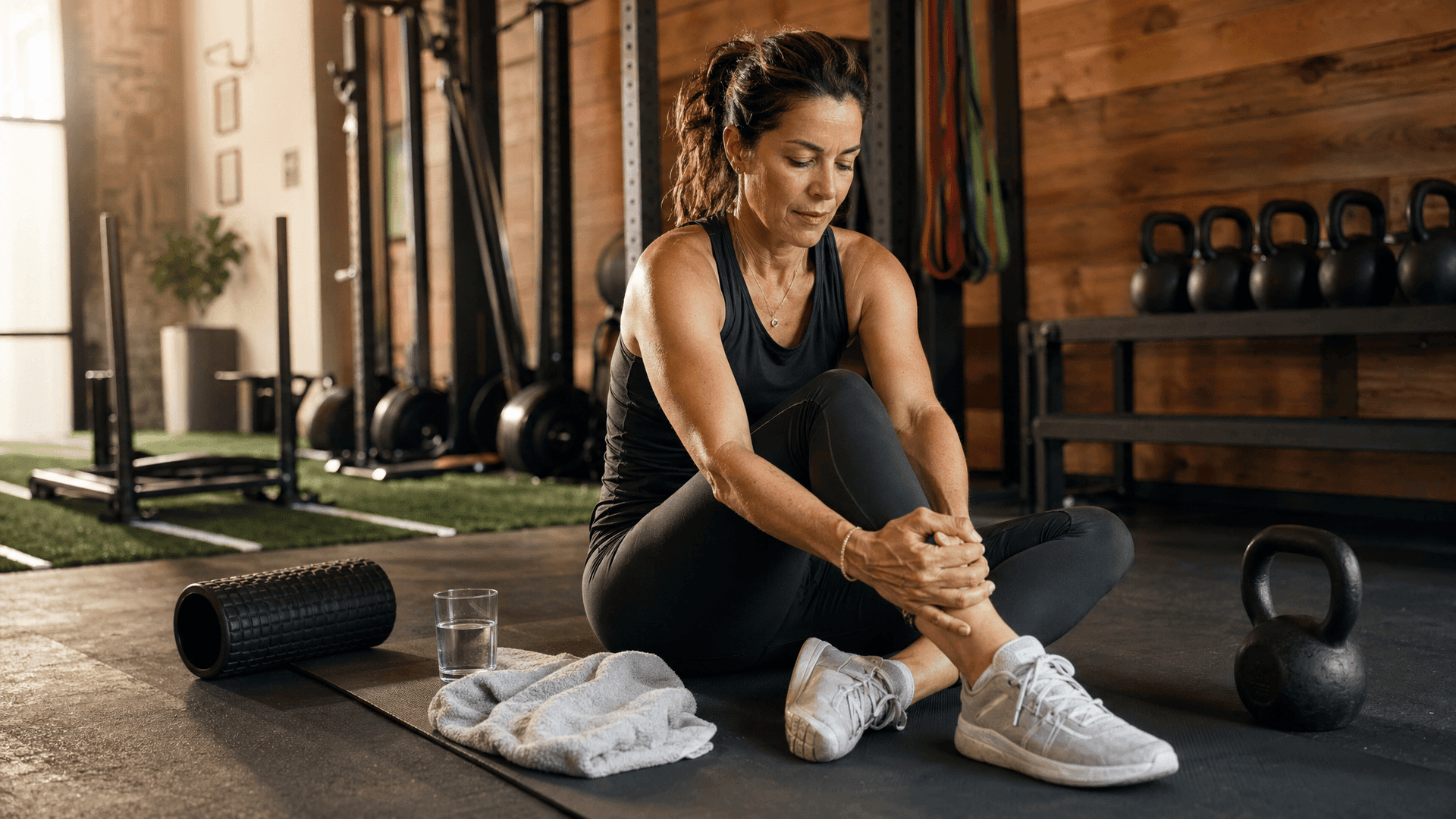
L-carnitine for muscle soreness after 40 is having a quiet moment in the longevity world, and for good reason. It sits at the intersection of three things many high-functioning adults care about: staying active, using fat efficiently, and recovering faster from the workouts that used to feel effortless.
If your legs feel heavier after strength training, your weekend hike follows you into Monday, or your body needs more coaxing between workouts than it did ten years ago, you are not imagining it. Recovery changes with age. Muscle tissue, mitochondria, insulin sensitivity, sleep quality, hormones, and inflammation all influence how quickly you bounce back. L-carnitine is not a shortcut around those fundamentals, but it is one of the nutrients your body uses to move fatty acids into mitochondria, where they can be converted into usable energy.[1][2]
That makes it especially interesting for people in their 40s and 50s who are not trying to become elite athletes. They simply want to lift, walk, train, travel, and live without feeling like recovery has become a second job.
What is L-carnitine, and why does recovery depend on it?
L-carnitine is a vitamin-like compound made from the amino acids lysine and methionine. You also get it from foods, especially red meat, fish, poultry, and dairy. Its best-known role is deceptively simple: helping shuttle long-chain fatty acids into mitochondria so they can be used for energy.[2]
Think of mitochondria as tiny energy kitchens inside your cells. Fatty acids are one of the ingredients, but they need a transport system to get where they can be burned. L-carnitine is part of that transport system. It also helps manage acyl groups, supports the balance between fat and glucose use, and may influence metabolic flexibility, the ability to switch between fuel sources depending on demand.[2][3]
Recovery is not just about sore muscles. It is about whether your cells can clear the aftermath of effort, repair tissue, restore energy, and regulate inflammation. That is why a nutrient connected to mitochondrial fuel handling can matter for how you feel after a challenging workout.[1][3][4]
Why muscle soreness can feel different after 40
Delayed-onset muscle soreness is normal after unfamiliar or intense exercise. It often peaks 24 to 72 hours after a workout, especially after eccentric movements like downhill walking, heavy lowering phases, lunges, or high-volume strength sessions.
After 40, the same workout can feel louder. There are several reasons:
- muscle protein synthesis may become less responsive without enough protein and training stimulus
- mitochondrial efficiency can decline with age and inactivity
- sleep fragmentation can reduce repair capacity
- hormonal shifts can affect training tolerance
- insulin resistance and inflammation can make recovery feel slower
- busy lives often stack stress on top of exercise
This is where lifestyle magazine language sometimes gets too mystical. There is nothing wrong with you if recovery takes longer. It is physiology meeting life. But there are also practical ways to support the system.
A 2021 randomized, double-blind, placebo-controlled trial in Nutrients studied L-carnitine tartrate supplementation for five weeks in adults ages 21 to 65. After a high-volume exercise challenge, the L-carnitine group had better perceived recovery and soreness scores, lower creatine kinase, and less decline in strength and power compared with placebo.[1] Creatine kinase is commonly used as an indirect marker of muscle damage, so that finding is relevant for people who feel unusually wrecked after training.
“L-carnitine tartrate supplementation was able to improve perceived recovery and soreness... and lower serum creatine kinase.”[1]
The study was funded by a company connected to the ingredient, so it should be read with that context. Still, it was controlled, human, and directly relevant to the recovery question.
L-carnitine for muscle soreness after 40: what the evidence suggests
The most honest answer is this: L-carnitine may support recovery in some people, especially when training creates measurable muscle stress, but it is not a universal anti-soreness switch.
That nuance matters. Soreness is affected by training novelty, sleep, total weekly volume, hydration, carbohydrate intake, menstrual or menopausal status, medications, injury history, and baseline fitness. L-carnitine is one input in a much larger recovery ecosystem.
The 2021 Nutrients trial is encouraging because it included men and women across a wide adult age range and reported that benefits were independent of gender and age in sub-analyses.[1] Participants did not simply report vague wellness improvements. The study measured soreness, perceived recovery, creatine kinase, and performance changes after a defined exercise challenge.
For a 45-year-old who lifts three times per week, a 52-year-old returning to tennis, or a 49-year-old trying to preserve strength while losing fat, that kind of outcome is practical. Less soreness can mean better consistency. Better consistency can mean better long-term results. But sharp pain, swelling, weakness, chest symptoms, dark urine, or soreness that does not improve should be evaluated by a clinician.
The metabolism connection: fat use, glucose, and midlife energy
L-carnitine is often marketed as a fat-burning nutrient. That phrase is catchy, but it can oversell what the research actually shows. A better way to say it is that L-carnitine participates in fatty acid transport and may support healthier metabolic markers in certain populations.[2][3]
A 2023 systematic review and dose-response meta-analysis in Frontiers in Nutrition included 41 randomized controlled trials with 2,900 adults. The authors found that L-carnitine supplementation was associated with reductions in fasting blood glucose, HbA1c, and HOMA-IR, a marker related to insulin resistance.[3] Effects appeared more relevant in people with higher baseline glucose, overweight or obesity, longer trial durations, and doses of at least 2 grams per day.[3]
That does not mean everyone should chase high-dose supplements. It does mean L-carnitine belongs in a serious conversation about metabolic flexibility, especially after 40, when glucose control and body composition can become more difficult even for active people.
A 2024 systematic review and dose-response meta-analysis in Clinical Therapeutics focused on adults with type 2 diabetes. It found small reductions in BMI, HbA1c, LDL cholesterol, triglycerides, total cholesterol, and fasting plasma glucose, while cautioning that heterogeneity was high and results should be interpreted carefully.[4] That caution is important. Studies are not identical, populations differ, and metabolic health is never driven by one molecule alone.
For RenuviaRX patients exploring L-Carnitine, the goal is not to promise dramatic weight loss. The more credible frame is cellular energy support, fat metabolism support, exercise recovery support, and physician-guided personalization.
Why women in midlife may pay closer attention
Women often notice recovery and metabolism shifts in a layered way. A strength workout that once felt energizing can suddenly feel draining. Body composition may change even without major changes in food. Sleep can become lighter. Stress tolerance can narrow. For many women, perimenopause and menopause add another set of variables.
That is one reason today’s conversation about L-carnitine is not just for athletes or bodybuilders. It is for active women who want their wellness routine to feel sustainable.
A 2022 double-blind randomized controlled trial in BMC Rheumatology studied women with overweight or obesity and knee osteoarthritis. Participants received 1,000 mg per day of L-carnitine or placebo for 12 weeks. The L-carnitine group showed a significant improvement in lipid accumulation product, a marker connected to visceral fat and cardiometabolic risk, although several cardiovascular indices did not significantly change.[5]
This study was not about muscle soreness. It was also conducted in a specific population, so it should not be generalized too broadly. But it adds a useful midlife-relevant signal: in women dealing with joint strain and metabolic risk factors, L-carnitine may influence certain markers tied to how the body stores and handles lipids.[5]
That can matter because recovery is not isolated from metabolism. If a body is struggling with inflammation, joint discomfort, glucose variability, or visceral fat accumulation, exercise can feel harder to maintain. Supporting the metabolic terrain may make movement feel more doable.
Injections vs. capsules: why physician guidance matters
Most published studies on L-carnitine use oral supplementation. RenuviaRX offers L-Carnitine through a telehealth model, with physician oversight and prescriptions when medically appropriate. That distinction is important because the research landscape is not one-to-one across every delivery method, dose, or patient profile.
So why consider an injectable option? Some patients prefer clinically supervised therapies because they want consistency, professional screening, and a structured plan rather than guessing from a supplement aisle. Others may be interested in bypassing some of the variability associated with digestion and adherence. Still, individual needs differ, and more is not automatically better.
A thoughtful L-carnitine plan should consider your exercise routine, recovery pattern, medications, health history, cardiometabolic risk factors, and whether symptoms suggest a medical issue that needs lab work. This is also why RenuviaRX uses a physician-supervised process. The goal is not to sell a magic injection. The goal is to determine whether L-Carnitine therapy may fit your health profile and wellness goals.
How to support recovery alongside L-carnitine
If you are considering L-carnitine for muscle soreness after 40, start with the foundation. The body recovers best when the basics are boringly consistent.
Prioritize protein at each meal, especially after resistance training. Build workouts gradually if you are returning after time away. Sleep as if it is part of your program, because deep sleep supports tissue repair, glucose regulation, appetite hormones, and mood. Hydrate, include electrolytes when sweating heavily, and use carbohydrates strategically when training is intense.
Then layer in targeted support. L-carnitine may make the most sense when your lifestyle is already directionally aligned and you are looking for a physician-guided way to support fat metabolism, cellular energy, and recovery.
Who might be a good fit for a conversation about L-Carnitine?
L-Carnitine may be worth discussing if you are in your 40s or 50s and notice that workouts leave you unusually sore, your stamina feels lower than expected, or body composition changes feel harder despite effort. It may also be relevant if you are actively working on metabolic health, returning to exercise after a sedentary season, or trying to maintain muscle while improving nutrition.
It may not be the right starting point if your symptoms are severe, sudden, or unexplained. New exercise intolerance, chest pressure, fainting, significant weakness, neurological symptoms, or persistent pain deserves medical attention first.
The beauty of a telehealth model is that you do not have to self-diagnose from internet fragments. You can start with a clinical intake, answer targeted questions, and let a licensed provider determine whether L-Carnitine therapy is appropriate.
The bottom line
L-carnitine is not a miracle cure for soreness, metabolism, or midlife fatigue. It is a real molecule with a real role in mitochondrial fat transport, and human research suggests it may support exercise recovery, soreness, metabolic flexibility, and selected cardiometabolic markers in certain adults.[1][3][4][5]
That is exactly the kind of wellness tool worth taking seriously, but not exaggerating. The most powerful version of recovery after 40 is not one intervention. It is intelligent training, good sleep, enough protein, metabolic awareness, and targeted support when your body can use it.
Ready to explore whether L-Carnitine therapy may support your recovery and metabolism goals? Start with a free physician assessment at RenuviaRX.
These statements have not been evaluated by the FDA. This content is for informational purposes only and does not constitute medical advice.
References
- Stefan M, Sharp M, Gheith R, Lowery R, Ottinger C, Wilson J, Durkee S, Bellamine A. "L-Carnitine Tartrate Supplementation for 5 Weeks Improves Exercise Recovery in Men and Women: A Randomized, Double-Blind, Placebo-Controlled Trial." Nutrients, vol. 13, no. 10, 2021, article 3432. DOI
- Virmani MA, Cirulli M. "The Role of l-Carnitine in Mitochondria, Prevention of Metabolic Inflexibility and Disease Initiation." International Journal of Molecular Sciences, vol. 23, no. 5, 2022, article 2717. DOI
- Zamani M, Pahlavani N, Nikbaf-Shandiz M, Rasaei N, Ghaffarian-Ensaf R, Asbaghi O, Shiraseb F, Rastgoo S. "The effects of L-carnitine supplementation on glycemic markers in adults: A systematic review and dose-response meta-analysis." Frontiers in Nutrition, vol. 9, 2023, article 1082097. DOI
- Mirrafiei A, Jayedi A, Shab-Bidar S. "The Effects of L-Carnitine Supplementation on Weight Loss, Glycemic Control, and Cardiovascular Risk Factors in Patients With Type 2 Diabetes: A Systematic Review and Dose-response Meta-Analysis of Randomized Controlled Trials." Clinical Therapeutics, vol. 46, no. 5, 2024, pp. 404-410. DOI
- Sangouni AA, Baghban F, Khosravi M, Mozaffari-Khosravi H, Dehghan A, Hosseinzadeh M, et al. "Effect of L-carnitine supplementation on lipid accumulation product and cardiovascular indices in women with overweight/obesity who have knee osteoarthritis: a randomized controlled trial." BMC Rheumatology, vol. 6, 2022, article 53. DOI
Ready to start your wellness journey?
Take a free online assessment and get physician-supervised therapy delivered to your door.
GET STARTED →