
Inspiratory Muscle Training After 40: The Five-Minute Breathing Workout With Real Trial Data

Sarah Chen
Medical Content Advisor · October 4, 2026
Inspiratory muscle training after 40 takes five minutes a day. Here is what randomized trials show about blood pressure, blood vessels, and oxidative stress.
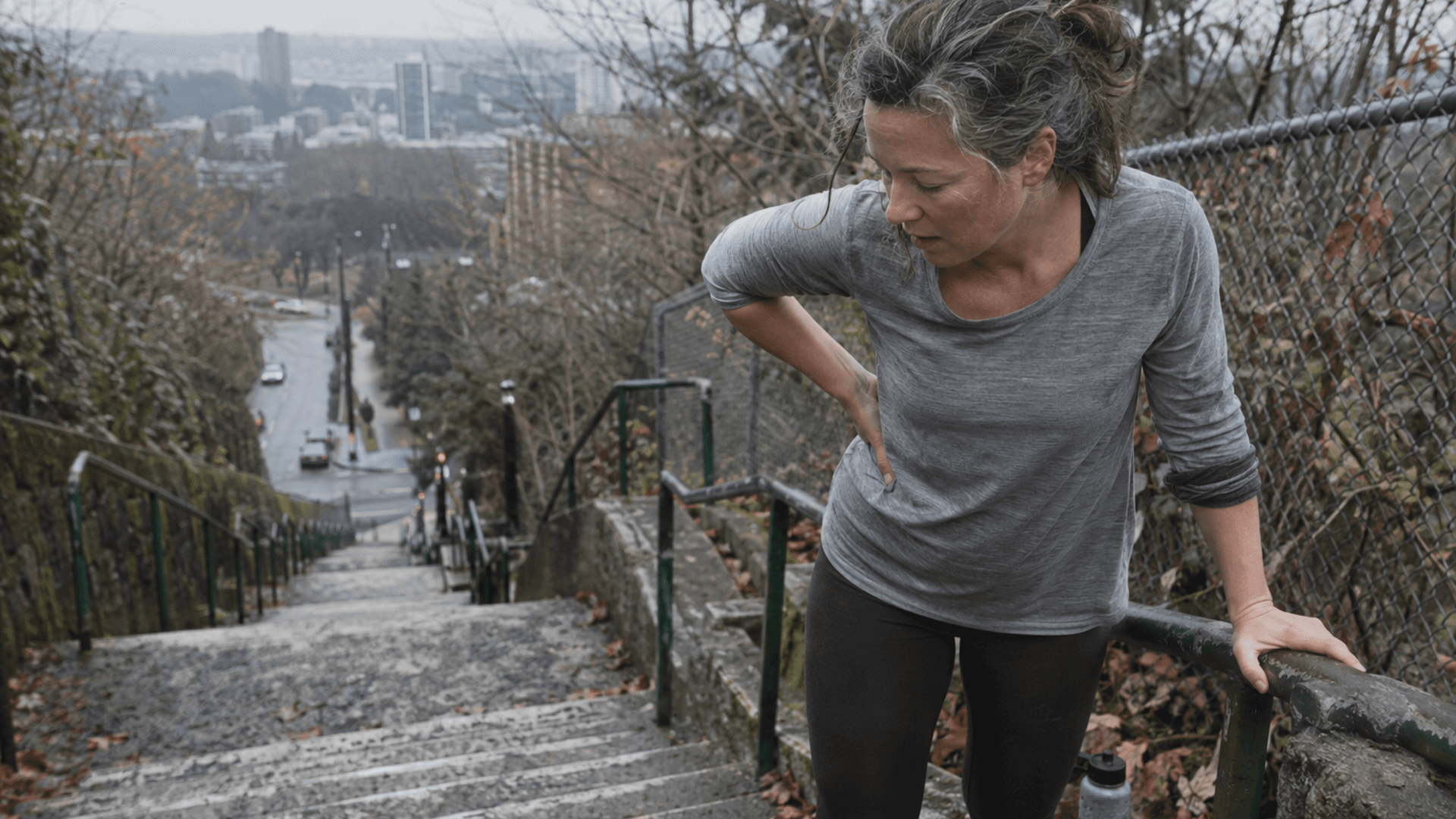
The stairs are where most people notice it first. Two flights that used to be unremarkable now require a pause at the landing, and the pause is not really about your legs. It is about your breathing, and specifically about the muscles doing the breathing. Inspiratory muscle training after 40 has become one of the more interesting findings in cardiovascular research precisely because it targets those muscles directly, in about five minutes a day, with randomized trial data behind it.
Breathing feels automatic, which is exactly why it gets ignored. Your diaphragm and the muscles between your ribs are skeletal muscle, subject to the same age-related loss of strength as your quadriceps or your grip. Aerobic capacity itself falls faster with each successive decade after the forties, and that acceleration holds regardless of how active people report being [5]. The American Heart Association has gone as far as arguing that cardiorespiratory fitness belongs in routine clinical assessment, because low fitness predicts mortality as strongly as established risk factors such as smoking and diabetes [6]. Unlike your quadriceps, almost nobody trains the breathing muscles on purpose.
Researchers at the University of Colorado Boulder decided to find out what happens when you do.
What Inspiratory Muscle Training Actually Is
The protocol is unusually simple. You breathe in hard through a handheld device that resists the inhale, the way a dumbbell resists a curl. The resistance is set as a percentage of your maximal inspiratory pressure, abbreviated PImax, which is the strongest inhale you can produce. High-resistance protocols typically use 75 percent of that value.
The dose in the Colorado trials was 30 resisted breaths per day, six days per week [1]. That takes roughly five to ten minutes. There is no treadmill, no gym, no warm-up, and no recovery-day arithmetic. It is the smallest exercise intervention in the cardiovascular literature to have produced effects of this size, which is both the reason it is interesting and the reason it deserves scrutiny.
Why Inspiratory Muscle Training After 40 Caught Researchers' Attention
The pivotal trial was a double-blind, randomized, sham-controlled study published in the Journal of the American Heart Association in 2021 [1]. Thirty-six adults aged 50 to 79 with systolic blood pressure of 120 mm Hg or above completed six weeks of either high-resistance training at 75 percent PImax or low-resistance sham training at 15 percent PImax.
Adherence reached roughly 95 percent of prescribed sessions, which is remarkable for any exercise study [1]. In the high-resistance group, casual systolic blood pressure fell from 135 to 126 mm Hg. Diastolic pressure moved more modestly, from 79 to 77. Twenty-four hour ambulatory systolic pressure was also lower after training than after sham. The sham group showed no blood pressure change at all [1].
"High-resistance IMST is a safe, highly adherable lifestyle intervention for improving blood pressure and endothelial function in midlife/older adults with above-normal initial systolic blood pressure." [1]
A nine point drop in systolic pressure is in the range you would expect from a first-line antihypertensive medication or a sustained aerobic program. Getting it from five minutes of breathing is the kind of result that invites both excitement and suspicion, and both responses are reasonable. One further detail stands out: roughly 75 percent of the blood pressure benefit was still present six weeks after participants stopped training [1].
What Happened Inside the Blood Vessels
The more mechanistically interesting findings were vascular. Brachial artery flow-mediated dilation, a standard measure of how well the inner lining of an artery responds to increased flow, improved by about 45 percent in the training group and did not change in the sham group [1].
The researchers then did something clever. They took blood serum from participants before and after the intervention and cultured human endothelial cells in it. Cells exposed to post-training serum showed increased nitric oxide bioavailability, greater activation of endothelial nitric oxide synthase, and lower reactive oxygen species bioactivity [1]. In other words, something circulating in the blood had changed in a way that made endothelial cells behave better. C-reactive protein, a general inflammation marker, also fell [1].
One thing did not budge. Arterial stiffness was unaffected by either training or sham [1]. That is a useful reminder that these effects are specific rather than global, and that the intervention is not quietly reversing every feature of vascular aging.
The Brain Result
A follow-up trial from the same group, published in 2023, looked at cerebrovascular function [2]. Using the same six-week, 75 percent PImax protocol in adults aged 50 to 79 with above-normal systolic pressure, researchers measured cerebrovascular reactivity to carbon dioxide, an index of how responsively brain blood vessels dilate.
Reactivity rose from 1.38 to 2.31 cm/s/mmHg after high-resistance training and did not change in the sham group [2]. Human brain endothelial cells exposed to post-intervention plasma produced more nitric oxide. Episodic memory scores improved modestly, from 95 to 103 on the NIH Toolbox measure [2].
The sample was very small, with nine participants in the training arm and seven in the sham arm [2]. The authors framed the work as promising rather than conclusive, and that framing is the correct one to carry forward.
The Wider Evidence, and Where It Thins Out
A 2023 meta-analysis in Frontiers in Cardiovascular Medicine pooled eight randomized controlled trials of inspiratory muscle training in people with hypertension, totaling 215 patients [3]. The pooled estimates were larger than the Colorado trial: systolic pressure down 12.55 mm Hg, diastolic down 4.77 mm Hg, heart rate down 5.92 beats per minute, and pulse pressure down 8.92 mm Hg [3].
Two caveats matter here. First, 215 patients across eight trials is a thin evidence base, and small trials systematically tend to overstate effects. Second, and counterintuitively, the subgroup analysis found that low-intensity training produced larger blood pressure reductions than medium to high intensity training [3]. That cuts against the high-resistance premise of the Colorado work. When dose-response signals point in opposite directions across study sets, the honest conclusion is that the optimal dose is not yet settled.
What the evidence does support consistently: the intervention is safe, well tolerated, highly adherable, and associated with measurable improvements in blood pressure and vascular function in midlife and older adults. What it does not yet support: precise dosing, long-term outcomes, or any particular benefit in people whose blood pressure is already normal.
Where Antioxidant Defense Fits In
The mechanism the Colorado team identified is worth sitting with, because it connects breathing training to a much older line of research. Their serum experiments pointed to nitric oxide bioavailability and reactive oxygen species as the mediators [1]. Nitric oxide is the signal that tells arteries to relax. Reactive oxygen species destroy it.
That tug of war is where the body's antioxidant systems earn their keep, and glutathione sits at the center of them. It is the most abundant intracellular antioxidant in human tissue and the primary buffer against oxidative damage.
The link is not purely theoretical. In a study published in the Journal of the American College of Cardiology, 17 patients with atherosclerosis or its risk factors received glutathione while endothelium-dependent vasodilation was measured directly in the femoral circulation [4]. Glutathione strongly potentiated acetylcholine-mediated vasodilation and raised cyclic GMP levels, a downstream marker of nitric oxide signaling. The effect appeared only in patients whose endothelial function was already depressed, and glutathione did not change responses to nitric oxide donors [4]. The authors concluded that thiol supplementation selectively improves human endothelial dysfunction by enhancing nitric oxide activity [4].
That is a small, mechanistic study using direct infusion, and it should not be read as evidence that any glutathione product lowers blood pressure. What it does establish is that redox state and nitric oxide availability are genuinely coupled in human arteries, which is the same axis the breathing trials moved. For people already addressing oxidative stress as part of a longevity plan, RenuviaRX offers physician-supervised glutathione therapy, with a short intake questionnaire at questionnaire.renuviarx.com to determine whether it is appropriate. Studies suggest it may support antioxidant capacity. The breathing work still has to be done with your own diaphragm.
How to Actually Do It
If you want to approximate the published protocol, a few practical points follow directly from the trial methods.
Get a resistance device that lets you set a specific pressure load. The trials used devices calibrated in centimeters of water pressure, not the inexpensive fixed-resistance tubes marketed as general lung trainers.
Establish your baseline. The protocols are expressed as a percentage of maximal inspiratory pressure, so you need that number before the percentage means anything. Respiratory therapists and many sports medicine clinics can measure it, and some devices estimate it.
Start lower than the research protocol. Seventy-five percent of PImax is genuinely demanding, and the trials used supervised ramp-up. Beginning at 30 to 50 percent for the first week or two is sensible.
Thirty breaths, six days per week. Inhale hard and fast against the resistance, then exhale normally. The whole session should take five to ten minutes.
Expect some lightheadedness early on, and stop if it persists. Clear this with your clinician first if you have uncontrolled hypertension, a recent cardiac event, a history of collapsed lung, or any diagnosed respiratory condition. The published trials did not enroll people with those conditions.
Measure your blood pressure the same way, at the same time of day, for two weeks before you start and again after six weeks. Without a baseline you will never know whether it worked for you specifically.
The Honest Summary
Inspiratory muscle training is one of the rare interventions where the time commitment is almost trivially small and the published effect sizes are not. It also rests on a handful of small trials from a limited number of research groups, with an unresolved question about optimal intensity sitting right in the middle of the literature. Both of those things are true at once, and neither cancels the other.
If you are already pausing on the stairs at 45 and looking for the highest-leverage five minutes in your day, this is a defensible place to spend them. It costs the price of a device and almost no time, the safety record across the published trials is clean, and the realistic downside is that nothing much happens.
Measure first. Then breathe hard.
These statements have not been evaluated by the FDA. This content is for informational purposes only and does not constitute medical advice. Speak with a licensed clinician before starting any new therapy or training protocol, particularly if you have cardiovascular or respiratory disease or take prescription medication.
References
- Craighead DH, Heinbockel TC, Freeberg KA, et al. Time-efficient inspiratory muscle strength training lowers blood pressure and improves endothelial function, NO bioavailability, and oxidative stress in midlife/older adults with above-normal blood pressure. Journal of the American Heart Association. 2021;10(13):e020980. doi:10.1161/JAHA.121.020980
- Freeberg KA, Craighead DH, Heinbockel TC, et al. Time-efficient, high-resistance inspiratory muscle strength training increases cerebrovascular reactivity in midlife and older adults. American Journal of Physiology: Heart and Circulatory Physiology. 2023;325(5):H1059-H1068. doi:10.1152/ajpheart.00351.2023
- Zheng S, Zhang Q, Li S, et al. Effects of inspiratory muscle training in patients with hypertension: a meta-analysis. Frontiers in Cardiovascular Medicine. 2023;10:1113509. doi:10.3389/fcvm.2023.1113509
- Prasad A, Andrews NP, Padder FA, Husain M, Quyyumi AA. Glutathione reverses endothelial dysfunction and improves nitric oxide bioavailability. Journal of the American College of Cardiology. 1999;34(2):507-514. doi:10.1016/S0735-1097(99)00216-8
- Fleg JL, Morrell CH, Bos AG, et al. Accelerated longitudinal decline of aerobic capacity in healthy older adults. Circulation. 2005;112(5):674-682. doi:10.1161/CIRCULATIONAHA.105.545459
- Ross R, Blair SN, Arena R, et al. Importance of assessing cardiorespiratory fitness in clinical practice: a case for fitness as a clinical vital sign. A scientific statement from the American Heart Association. Circulation. 2016;134(24):e653-e699. doi:10.1161/CIR.0000000000000461
Ready to start your wellness journey?
Take a free online assessment and get physician-supervised therapy delivered to your door.
GET STARTED →