
L-Carnitine for Workout Recovery: What the Research Really Shows

Sarah Chen
Medical Content Advisor · August 29, 2026
Explore L-carnitine for workout recovery, including evidence on soreness, muscle damage, cellular energy, safety, dosing, and realistic expectations after 40.
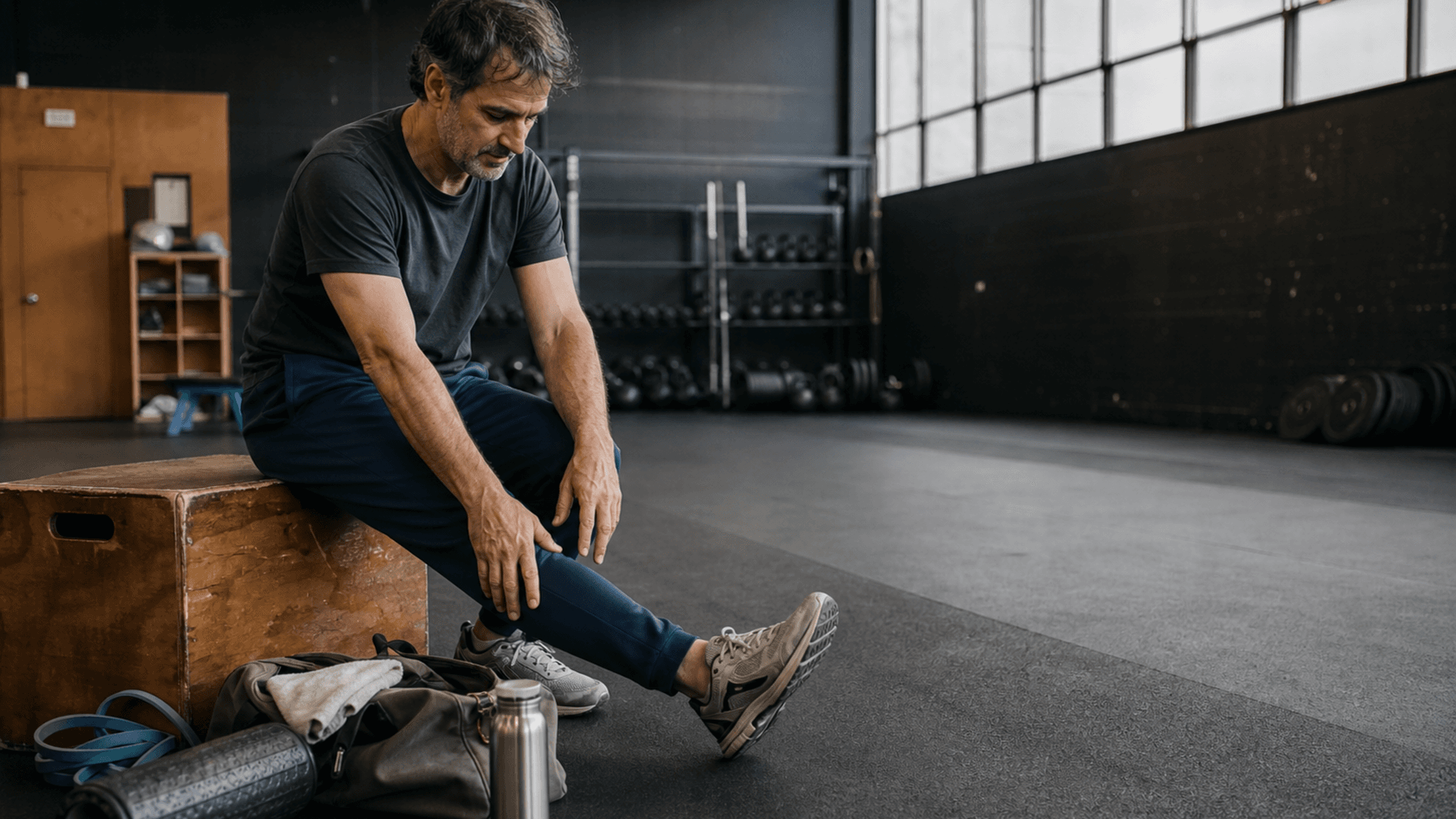
The workout itself may last an hour. The stiff-legged walk down the stairs two days later can feel much longer. That familiar soreness is one reason people are increasingly curious about L-carnitine for workout recovery, especially as staying strong becomes a bigger part of healthy aging. The research is interesting, but it is also more nuanced than the promise of a quick recovery shortcut.
L-carnitine is best known for helping cells use fat to produce energy. Human studies also suggest that consistent supplementation may support certain markers of recovery after demanding exercise. It is not a pain reliever, a substitute for sleep, or a guarantee that tomorrow's workout will feel effortless. Think of it as one possible supporting player in a recovery plan whose foundations remain training, food, hydration, and rest.
Why recovery can feel different after 40
Delayed-onset muscle soreness, or DOMS, usually appears 12 to 24 hours after an unfamiliar or strenuous workout and may peak around 24 to 72 hours. It often follows movements that load a muscle while it lengthens, such as lowering a dumbbell, descending stairs, or controlling the downward phase of a squat.
This soreness does not simply mean lactic acid is “stuck” in the muscles. Lactate is cleared relatively quickly. DOMS reflects a more complex response involving microscopic disruption, local inflammation, changes in connective tissue, and the nervous system's interpretation of those signals.
Age does not make progress impossible. Adults in their 40s and 50s can gain strength and muscle with well-designed resistance training. Still, recovery may feel less forgiving because of changes in sleep, hormones, activity history, work stress, nutrition, and the size of the training jump. A person returning to weights after a decade at a desk may experience more soreness than a consistently active peer of the same age.
The smartest response is rarely to chase zero soreness. The goal is to recover well enough to train consistently without mistaking pain for proof of effectiveness. Severe swelling, marked weakness, dark urine, chest pain, or pain that feels sharp rather than achy warrants medical attention.
What L-carnitine does in cellular energy metabolism
L-carnitine is a naturally occurring compound made from the amino acids lysine and methionine. The body produces it primarily in the liver and kidneys, and animal foods supply additional amounts. Most carnitine in the body is stored in skeletal and cardiac muscle.
Its classic job is sometimes described as a shuttle. Long-chain fatty acids need help crossing the inner mitochondrial membrane, where they can be oxidized to help generate ATP, the cell's usable energy currency. L-carnitine participates in that transport system and also helps manage the balance between free and acylated coenzyme A inside mitochondria.
That biology explains why L-carnitine is often marketed for fat burning. Yet a plausible mechanism is not the same as a guaranteed real-world result. Having more carnitine available does not automatically force the body to burn a meaningful amount of extra body fat. Weight change still depends on many factors, including energy intake, movement, muscle mass, sleep, medications, and metabolic health.
Recovery researchers have focused on a different possibility. By supporting cellular metabolism and potentially influencing oxidative stress, blood flow, and exercise-related tissue disruption, L-carnitine may affect how muscles respond after strenuous work. A 2018 review by Fielding and colleagues summarized evidence suggesting that the most consistent signal was in recovery, rather than a dramatic acute performance boost.[1]
L-carnitine for workout recovery: the strongest evidence
The most useful overview comes from a 2020 systematic review and meta-analysis of seven randomized clinical trials. The researchers found improvements in reported muscle soreness at multiple follow-up points and reductions in creatine kinase, myoglobin, and lactate dehydrogenase at 24 hours.[2] These blood markers can rise after demanding exercise, although they do not perfectly map to how a person feels or performs.
The effect was not uniform. The analysis suggested more benefit in untrained people and after resistance exercise, and some biochemical effects did not persist beyond 24 hours. That matters for the typical 40-something restarting strength training, but it also argues against treating L-carnitine as universally effective.
“Further research is needed to clarify impacts of L-Carnitine on DOMS.”[2]
A 2021 randomized, double-blind, placebo-controlled trial enrolled 80 adults ages 21 to 65, with 73 completing the protocol. After five weeks, the L-carnitine tartrate group reported better perceived recovery and soreness and had lower creatine kinase after an exercise challenge than the placebo group.[3] The study also found less decline in strength and power. Importantly, the trial was sponsored by a carnitine ingredient manufacturer, and two authors were company employees. That does not invalidate the results, but it belongs in a fair reading of the evidence.
Research focused specifically on middle age is smaller but relevant. In a double-blind crossover study of 18 generally active men and women with an average age near 49, three weeks of L-carnitine L-tartrate was associated with lower muscle soreness and several biochemical markers of stress and tissue disruption after resistance exercise. Measures of strength and power did not improve.[4]
Earlier work in resistance-trained men also found lower post-exercise biochemical markers and less muscle disruption on MRI after L-carnitine L-tartrate than placebo.[5] A later nine-week trial in 23 resistance-trained men reported improvements in some measures of training volume and anaerobic power, along with changes in lactate and antioxidant markers.[6] These are promising signals, but both were small studies.
Taken together, the evidence supports a careful conclusion: consistent L-carnitine use may support recovery from strenuous resistance exercise for some adults, particularly those who are untrained or returning to training. It is less convincing as an immediate pre-workout energy hack, and it should not be presented as a proven way to prevent injury.
What the studies cannot tell us
There are several limits worth keeping in view before translating research into a personal plan.
First, most exercise studies used oral L-carnitine or L-carnitine L-tartrate, commonly around 2 grams daily for several weeks. These findings do not directly establish the benefits, ideal dose, or comparative effectiveness of injectable L-carnitine. Different formulations and delivery routes can have different pharmacokinetics. Evidence from an oral trial should not be casually repackaged as proof for an injection.
Second, trials measure different outcomes. Soreness scores, creatine kinase, MRI findings, strength, and perceived recovery are related but not interchangeable. A lower laboratory marker is interesting, yet what matters to most people is whether they can move comfortably, maintain good form, and return to training on schedule.
Third, the evidence base includes small samples, varied exercise protocols, different training backgrounds, and some industry funding. A meta-analysis can combine trials, but it cannot erase those differences. Results from a brutal high-volume squat protocol may not predict recovery from yoga, swimming, or a weekend hike.
Finally, muscle soreness is not always a problem to eliminate. Mild, short-lived soreness after a new stimulus can be normal. The better question is whether recovery supports consistency and quality of life. If fatigue or muscle pain is persistent, unusually intense, or paired with weakness, a clinician may need to evaluate other causes such as anemia, thyroid disease, medication effects, sleep disorders, low energy intake, or nutrient deficiency.
Build the recovery basics before adding support
No compound can compensate for a recovery routine that is missing its foundations. Start with the levers that have the broadest evidence and the greatest practical impact.
Progress gradually. A common mistake is returning to the weights you remember rather than the capacity you have today. Begin with fewer sets and leave a few repetitions in reserve. Increase volume or load in measured steps, not both at once.
Prioritize protein and total nutrition. Spread protein-rich meals across the day and include enough total calories to match your goals and training demand. Whole foods also provide carbohydrates for glycogen, micronutrients, and the raw materials needed for repair. A registered dietitian can personalize intake when body-composition goals, medical conditions, or restrictive diets make this complicated.
Protect sleep. Deep sleep supports multiple restorative processes. A consistent schedule, cool dark room, morning daylight, and limits on late alcohol may do more for next-day readiness than a crowded supplement shelf.
Hydrate according to conditions. Needs rise with heat, sweat, altitude, and session length. Water is usually sufficient for ordinary training, while longer or sweat-heavy sessions may call for electrolytes. More is not always better, since excessive plain water can also be dangerous.
Use active recovery intelligently. Easy walking, gentle cycling, or comfortable mobility work can reduce stiffness without adding another hard training stress. Aggressive stretching of very sore tissue is not required. Pain should guide you away from intensity, not dare you to push through it.
Schedule real rest. Adaptation happens between sessions. Alternating muscle groups, including low-intensity days, and taking complete rest when needed can help make training sustainable.
Who should discuss L-carnitine with a clinician
Many healthy adults tolerate L-carnitine, but “naturally occurring” does not mean appropriate for everyone. Reported adverse effects can include nausea, abdominal cramps, diarrhea, and a fishy body odor. Safety and dosing depend on the formulation, route, health history, and other medications.
Talk with a licensed clinician before using L-carnitine if you are pregnant or breastfeeding, have kidney or liver disease, have a seizure disorder, take thyroid hormone or anticoagulant medication, or are being treated for a significant medical condition. A clinician can also help determine whether fatigue or poor recovery deserves diagnostic evaluation rather than supplementation.
Product quality matters. Compounded medications are not FDA-approved, meaning the FDA does not review them for safety, effectiveness, or manufacturing quality before they are marketed. When a compounded therapy is prescribed, it should come from a qualified pharmacy and be used under medical supervision.
RenuviaRX offers physician-supervised L-carnitine injections through a HIPAA-compliant telehealth process, with medications compounded by Strive Pharmacy. Eligibility is determined through a medical questionnaire and clinician review. This is an individualized treatment decision, not a replacement for the training and recovery fundamentals above.
A realistic way to think about recovery support
The case for L-carnitine is neither miracle nor myth. Human trials suggest it may support soreness, certain markers of muscle disruption, and perceived recovery after challenging resistance exercise. The signal appears more meaningful after consistent use than after a single dose, and it may be especially relevant for adults returning to training. At the same time, sample sizes are often modest, outcomes vary, and the published exercise evidence is largely based on oral formulations.
If your goal is to stay active through your 40s, 50s, and beyond, make strength training repeatable first. Progress slowly, eat enough, sleep consistently, and listen when pain is telling you something different from ordinary soreness. If you are still curious about L-carnitine, a clinician can help you weigh potential benefits, limitations, route-specific uncertainty, medication interactions, and your health history. RenuviaRX's medical questionnaire is one way to begin that conversation without turning a wellness goal into a sales pitch.
These statements have not been evaluated by the FDA. This content is for informational purposes only and does not constitute medical advice.
References
Fielding R, Riede L, Lugo JP, Bellamine A. L-Carnitine Supplementation in Recovery after Exercise. Nutrients. 2018;10(3):349. https://doi.org/10.3390/nu10030349
Yarizadh H, Shab-Bidar S, Zamani B, Nazary Vanani A, Baharlooi H, Djafarian K. The Effect of L-Carnitine Supplementation on Exercise-Induced Muscle Damage: A Systematic Review and Meta-Analysis of Randomized Clinical Trials. Journal of the American College of Nutrition. 2020;39(5):457-468. https://doi.org/10.1080/07315724.2019.1661804
Stefan M, Sharp M, Gheith R, Lowery R, Ottinger C, Wilson J, Durkee S, Bellamine A. L-Carnitine Tartrate Supplementation for 5 Weeks Improves Exercise Recovery in Men and Women: A Randomized, Double-Blind, Placebo-Controlled Trial. Nutrients. 2021;13(10):3432. https://doi.org/10.3390/nu13103432
Ho JY, Kraemer WJ, Volek JS, Fragala MS, Thomas GA, Dunn-Lewis C, Coday M, Häkkinen K, Maresh CM. L-Carnitine L-Tartrate Supplementation Favorably Affects Biochemical Markers of Recovery from Physical Exertion in Middle-Aged Men and Women. Metabolism. 2010;59(8):1190-1199. https://doi.org/10.1016/j.metabol.2009.11.012
Volek JS, Kraemer WJ, Rubin MR, Gómez AL, Ratamess NA, Gaynor P. L-Carnitine L-Tartrate Supplementation Favorably Affects Markers of Recovery from Exercise Stress. American Journal of Physiology-Endocrinology and Metabolism. 2002;282(2):E474-E482. https://doi.org/10.1152/ajpendo.00277.2001
Koozehchian MS, Daneshfar A, Fallah E, Agha-Alinejad H, Samadi M, Kaviani M, Kaveh B M, Jung YP, Hassanzadeh Sablouei M, Moradi N, Earnest CP, Chandler TJ, Kreider RB. Effects of Nine Weeks L-Carnitine Supplementation on Exercise Performance, Anaerobic Power, and Exercise-Induced Oxidative Stress in Resistance-Trained Males. Journal of Exercise Nutrition & Biochemistry. 2018;22(4):7-19. https://doi.org/10.20463/jenb.2018.0026
Ready to start your wellness journey?
Take a free online assessment and get physician-supervised therapy delivered to your door.
GET STARTED →