
L-Carnitine for Workout Recovery After 40: What the Research Shows

Sarah Chen
Medical Content Advisor · August 14, 2026
Explore L-carnitine for workout recovery after 40, including research on muscle soreness, oxidative stress, energy production, and realistic benefits.
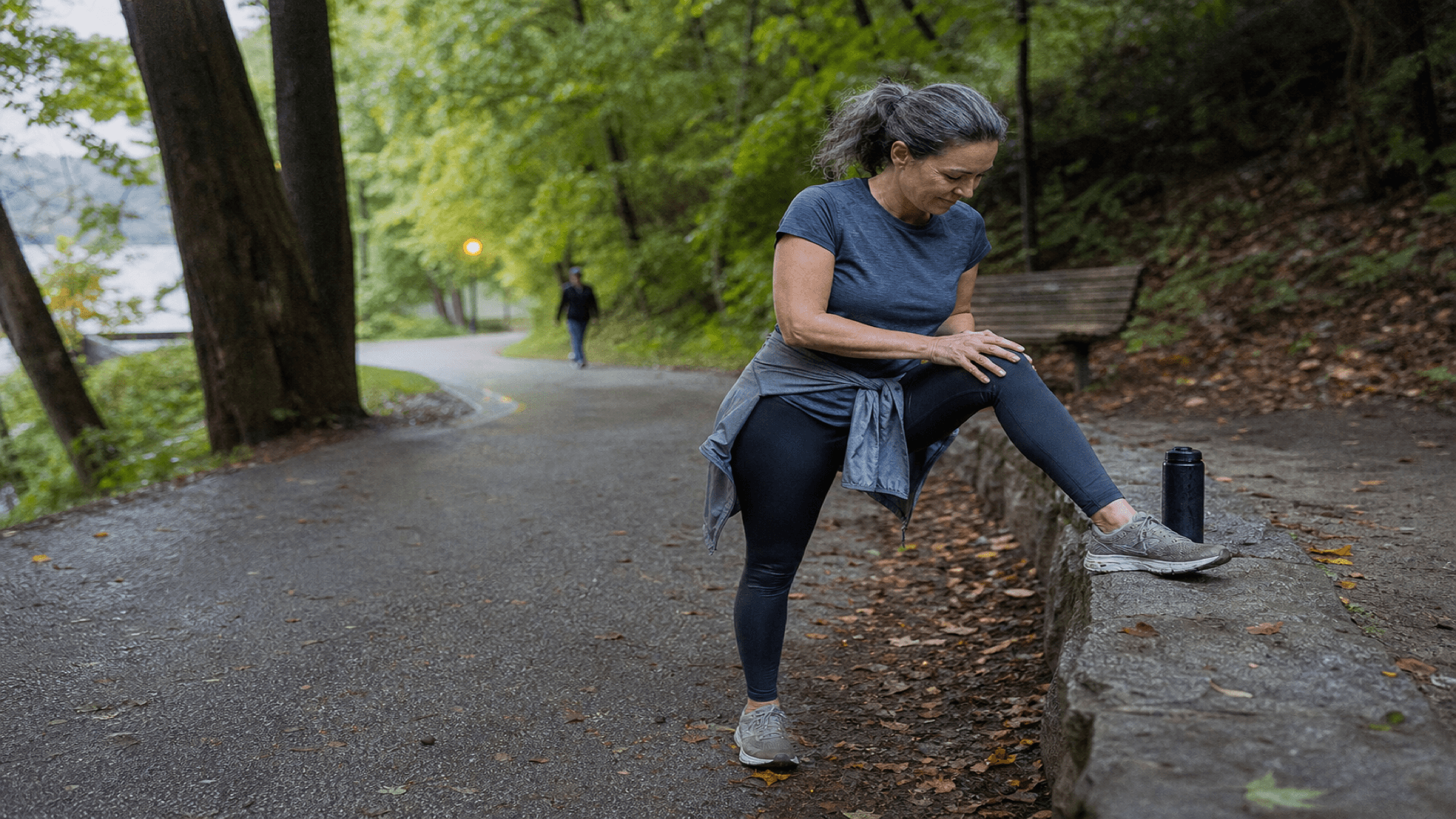
L-carnitine for workout recovery after 40 is attracting attention for a reason that has little to do with chasing athletic records. For many adults, the real goal is to wake up after a strength session, long hike, or pickleball game feeling ready to move again. When soreness lingers and energy feels slower to return, even a sensible exercise plan can become difficult to sustain.
Recovery does change with age, but it is not a lost cause. Sleep, protein, hydration, training volume, hormones, medications, and health conditions all influence how quickly the body rebounds. L-carnitine has joined that conversation because it participates in cellular energy production, and human research suggests it may support certain markers of muscle recovery and soreness. The evidence is promising in places, mixed in others, and best understood without miracle language.
Here is what L-carnitine does, what clinical studies actually measured, and how to decide whether physician-supervised support belongs in a broader recovery routine.
Why workout recovery can feel different after 40
A challenging workout creates a useful form of stress. Muscle fibers experience microscopic disruption, stored fuel is used, and the body temporarily increases inflammatory and oxidative activity. During recovery, it repairs tissue and adapts so that a similar effort becomes easier next time. Delayed-onset muscle soreness, often called DOMS, commonly peaks one to three days after an unfamiliar or demanding session.
That basic process occurs at every adult age. After 40, however, several overlapping changes can make the margin for error smaller. Muscle protein synthesis may respond less robustly to a given meal or training stimulus. Sleep can become lighter. Work and family stress may compete with recovery time. Perimenopause, menopause, and age-related hormonal shifts can affect body composition, temperature regulation, sleep, and perceived fatigue. An ambitious workout that once fit easily into the week may now require more deliberate preparation.
Training history matters too. The soreness after returning to squats is not proof that aging has suddenly accelerated. It may simply reflect an unfamiliar eccentric load, meaning the muscle lengthened under tension. A systematic review and meta-analysis of seven randomized trials found that L-carnitine's apparent benefits for muscle soreness and some damage markers were more pronounced in untrained participants and in resistance-training settings.[1] That nuance helps explain why one person may notice a difference while a highly trained athlete may not.
Recovery is also not the same as performance. A therapy might influence soreness or a blood marker without making someone stronger, faster, or leaner. Keeping those outcomes separate is essential when reading supplement research.
How L-carnitine supports cellular energy
L-carnitine is a naturally occurring compound made from the amino acids lysine and methionine. The body produces it mainly in the liver and kidneys, and most carnitine is stored in skeletal and cardiac muscle. Meat and dairy foods provide dietary carnitine, while plant foods generally contain less.
Its best-established biological role is helping transport long-chain fatty acids into mitochondria. These structures act as cellular energy centers, converting fuel into adenosine triphosphate, or ATP. The process is sometimes described as the carnitine shuttle. L-carnitine also helps move certain metabolic byproducts out of mitochondria, supporting the balance of compounds needed for normal energy metabolism.[2]
That mechanism sounds like an obvious path to instant energy or fat loss, but biology is not that simple. More circulating carnitine does not guarantee that muscle carnitine rises, that fat oxidation increases, or that exercise performance improves. In a randomized crossover trial of endurance-trained men, four weeks of oral L-carnitine L-tartrate did not alter fuel use or endurance performance.[3] This negative finding is useful because it prevents the mechanism from being oversold.
The more consistent research signal has appeared around recovery from demanding exercise. Proposed explanations include less exercise-related disruption to muscle tissue, improved blood flow or oxygen availability during exertion, and effects on oxidative stress. These remain areas of investigation rather than settled clinical guarantees.[2]
What studies say about L-carnitine for workout recovery
The most direct overview comes from a 2020 systematic review and meta-analysis by Yarizadh and colleagues. Across seven randomized clinical trials, pooled results favored L-carnitine for muscle soreness from immediately after exercise through 96 hours. Creatine kinase, myoglobin, and lactate dehydrogenase, all indirect markers associated with muscle disruption, were lower at the 24-hour assessment, but the marker differences did not persist at later time points.[1]
The authors' conclusion was encouraging but appropriately limited:
“Further research is needed to clarify impacts of L-Carnitine on DOMS.”[1]
An older crossover trial is especially relevant to the RenuviaRX audience because it studied middle-aged adults rather than only college-age athletes. Ho and colleagues enrolled healthy men and women, with average ages around the mid-40s for men and early 50s for women. After L-carnitine L-tartrate supplementation, participants showed lower exercise-related changes in several biochemical markers and reported less soreness. Strength, power, and a functional get-up-and-go test did not improve.[4]
A 2021 randomized, double-blind, placebo-controlled trial included 80 adults ages 21 to 65. After five weeks, the L-carnitine L-tartrate group reported better perceived recovery and soreness, had lower creatine kinase, and showed smaller post-exercise declines in strength and power than the placebo group.[5] The broad age range is helpful, although it does not tell us precisely how every subgroup over 40 will respond.
The overall picture is more compelling than any single study. Still, many trials are small, use different exercise protocols, and study oral L-carnitine L-tartrate rather than injectable L-carnitine. Results from one route and formulation cannot automatically establish the benefits of another. Product-specific decisions require a clinician who understands the evidence, the patient's health history, and the intended use.
Soreness, muscle damage, and oxidative stress are not identical
The terms used in recovery research can blur together. Soreness is a subjective experience. Creatine kinase and myoglobin are measurable in blood, but their levels vary widely between people and do not provide a complete picture of how well a muscle is functioning. Oxidative stress refers to an imbalance between reactive molecules and the systems that control them. These outcomes can move together, but they do not always do so.
In a small 2002 randomized crossover study, Volek and colleagues examined resistance-trained men after a high-repetition squat protocol. Three weeks of L-carnitine L-tartrate was associated with smaller increases in several blood markers linked to muscle disruption and oxidative activity. MRI-assessed muscle disruption was also lower during the L-carnitine condition.[6] The study offers a plausible biological signal, but its small, young, male sample limits how broadly it can be applied.
Across the wider literature, muscle damage and oxidative stress are rarely assessed together. In other words, it is reasonable to say L-carnitine may support recovery pathways. It is not reasonable to promise that it will eliminate inflammation, prevent all soreness, or transform every workout.
This distinction matters for real life. Mild soreness after a new exercise can be normal. Severe swelling, profound weakness, dark urine, chest pain, fainting, or pain that feels sharp rather than achy deserves medical attention. No wellness therapy should be used to mask a possible injury or a dangerous response to exertion.
Build the recovery foundation before adding support
L-carnitine is best viewed as an optional layer, not the foundation. The largest improvements often come from adjusting training and daily habits so the body has enough resources to adapt.
Start with progressive loading. Increase weight, volume, speed, or distance gradually rather than changing everything in one week. Adults returning after a break often do better leaving two or three repetitions in reserve during early strength sessions. Consistency creates adaptation without requiring exhaustion.
Protein also matters. Spread protein-rich meals across the day, with an amount appropriate for your body size, kidney health, activity, and medical needs. Pair that with enough total food and carbohydrates to support the work being performed. Chronic under-fueling can look like poor motivation when it is really inadequate recovery capacity.
Then protect the less glamorous basics:
- Aim for a consistent sleep schedule and address snoring, insomnia, or daytime sleepiness.
- Replace fluids after sweating and consider electrolyte needs during long or hot sessions.
- Alternate demanding days with easier movement such as walking, cycling, or mobility work.
- Train the same movement pattern regularly enough that every session is not a novel shock.
- Limit alcohol near bedtime because it can reduce sleep quality even when it makes falling asleep feel easier.
- Schedule rest before fatigue forces it.
Persistent recovery problems are worth investigating. Iron deficiency, low vitamin B12, thyroid disorders, sleep apnea, low energy intake, medication effects, and hormonal changes can all contribute to fatigue or exercise intolerance. A targeted therapy cannot compensate for an untreated condition.
Who should discuss L-carnitine with a clinician
Adults who exercise consistently but feel that recovery remains a weak link may want to discuss L-carnitine with a qualified clinician. The conversation should cover the actual goal, such as soreness, general energy, exercise consistency, or a diagnosed deficiency. It should also clarify that research outcomes do not guarantee an individual response.
Medical screening is important. L-carnitine can cause side effects, including nausea, abdominal discomfort, diarrhea, and a fishy body odor. It may interact with medications or require added caution for people with seizure disorders, thyroid disease, kidney disease, pregnancy, or breastfeeding. A clinician should review current prescriptions, supplements, allergies, and relevant laboratory results before recommending treatment.
Route matters as well. Much of the exercise-recovery literature cited here studied oral L-carnitine or L-carnitine L-tartrate. Physician-supervised injectable therapy has different practical considerations, and there is no responsible way to infer a personal dose from a blog post. More is not automatically better.
RenuviaRX offers physician-supervised L-Carnitine through an online medical questionnaire, with treatment eligibility determined by a board-certified physician and medication compounded by Strive Pharmacy. For an appropriate patient, this can provide a structured alternative to self-experimentation. It should remain part of a larger plan that includes intelligent training, sleep, nutrition, and follow-up.
A realistic conclusion for better recovery after 40
L-carnitine for workout recovery after 40 has a credible biological rationale and a meaningful, though not definitive, body of human research. Studies suggest it may support lower perceived soreness and improve some short-term markers associated with exercise-related muscle stress. The strongest takeaway is about recovery support, not guaranteed performance, fat loss, or anti-aging effects.
If recovery is keeping you from being consistent, first review training load, protein, sleep, hydration, and possible medical causes. If those pieces are in place and you still want targeted support, a clinician can help you weigh the evidence, risks, route, and fit. You can learn more about RenuviaRX L-Carnitine and begin the medical questionnaire at questionnaire.renuviarx.com.
These statements have not been evaluated by the FDA. This content is for informational purposes only and does not constitute medical advice.
References
[1] Yarizadh H, Shab-Bidar S, Zamani B, Nazary Vanani A, Baharlooi H, Djafarian K. The effect of L-carnitine supplementation on exercise-induced muscle damage: a systematic review and meta-analysis of randomized clinical trials. Journal of the American College of Nutrition. 2020;39(5):457-468. https://doi.org/10.1080/07315724.2019.1661804
[2] Fielding R, Riede L, Lugo JP, Bellamine A. L-carnitine supplementation in recovery after exercise. Nutrients. 2018;10(3):349. https://doi.org/10.3390/nu10030349
[3] Broad EM, Maughan RJ, Galloway SDR. Effects of four weeks L-carnitine L-tartrate ingestion on substrate utilization during prolonged exercise. International Journal of Sport Nutrition and Exercise Metabolism. 2005;15(6):665-679. https://doi.org/10.1123/ijsnem.15.6.665
[4] Ho JY, Kraemer WJ, Volek JS, Fragala MS, Thomas GA, Dunn-Lewis C, Coday M, Häkkinen K, Maresh CM. L-carnitine L-tartrate supplementation favorably affects biochemical markers of recovery from physical exertion in middle-aged men and women. Metabolism. 2010;59(8):1190-1199. https://doi.org/10.1016/j.metabol.2009.11.012
[5] Stefan M, Sharp M, Gheith R, Lowery R, Ottinger C, Wilson J, Durkee S, Bellamine A. L-carnitine tartrate supplementation for 5 weeks improves exercise recovery in men and women: a randomized, double-blind, placebo-controlled trial. Nutrients. 2021;13(10):3432. https://doi.org/10.3390/nu13103432
[6] Volek JS, Kraemer WJ, Rubin MR, Gómez AL, Ratamess NA, Gaynor P. L-carnitine L-tartrate supplementation favorably affects markers of recovery from exercise stress. American Journal of Physiology-Endocrinology and Metabolism. 2002;282(2):E474-E482. https://doi.org/10.1152/ajpendo.00277.2001
Ready to start your wellness journey?
Take a free online assessment and get physician-supervised therapy delivered to your door.
GET STARTED →